
The well-established Advanced Course on Computational Geotechnics for experienced PLAXIS users is organised every year as a continuation of the Standard Course on Computational Geotechnics. One of the aims of this course is to teach the application of advanced soil models. Whereas the standard course concentrates on using the Hardening Soil model, in the Advanced course attention is now fully focused on understanding the HSsmall model with small-strain stiffness and also the Soft Soil Creep model for soft clay. Experts with a thorough theoretical background and an extensive experience in practical computer modelling have been invited to give lectures and to prepare exercises as well as case studies.
What will the course cover?
• Plasticity, shear and density hardening of soils
• HSsmall model definition, parameters and usage
• Critical state soil mechanics
• Behaviour of natural clays
• Soft Soil Creep model definition, parameters and usage
• Soil improvement
• Shallow, piled and piled raft foundations
• Modelling foundations in PLAXIS 3D
• Slope stability and factor of safety (optional 4th day)
• Introduction to Limit Equilibrium analysis and GeoStudio (optional 4th day)
• Modelling reinformcement in LE analysis (optional 4th day)
• Combined analyis using PLAXIS and GeoStudio (optional 4th day)
What should I have?
- Prior experience in using PLAXIS for engineering applications
Participants can choose to attend the 3-days advanced course or the full 4 days of advanced course, including the extra day on slope stability analysis using PLAXIS and GeoStudio. Participants may also attend only the day on slope stability using PLAXIS and GeoStudio.
Advanced Course on Computational Geotechnics: 6-8 March 2023
Workshop Slope stability using PLAXIS and GeoStudio : 9 March 2023
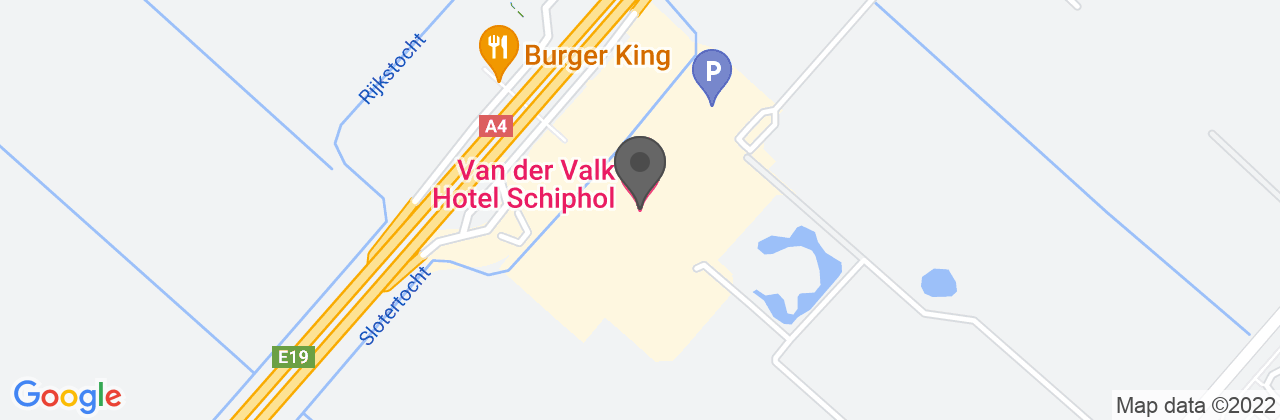
The course cost includes:
• Lunches and dinners on the course days
• The use of a computer provided by the organization with the appropriate licenses installed
• Binder with printed course material
€1695 (3 days Advanced Course)
€1895 (3 days Advanced Course + Slope Stability using PLAXIS and GeoStudio)
Helmut obtained his Ph.D. from the University College of Swansea, UK and has taught for many years courses on Advanced Soil Mechanics and Computational Geomechanics at the Graz University of Technology, Austria. He has over 35 years of experience in development and application of the finite element method in geotechnics.
Thomas worked several years as field geophysicist, structural-, and geotechnical engineer before he got into constitutive modelling of geo-materials. As part of his Ph.D. thesis he developed the HSsmall model, a small-strain extension of the Hardening Soil mode before moving to NTNU. Nowadays he is fully focused on running his own company specialised in numerical geotechnics.
Yasser has been a researcher and consultant since over 25 years. He has a wide experience by the design and construction of raft and piled raft foundations of high-rise buildings and bridge foundation. He was also involved in many projects dealing with stability of landslides, soil improvement, rock fall hazards and tunnelling. In 2009 Yasser become professor of structural engineering at Ain Shams University in Cairo.
Martino studied at the University of Parma, where he got a PhD in Geotechnical Engineering in 2005. After moving to Stuttgart for a Post-Doc, he worked on the development of constitutive models for creep in soft soils and then, in 2009, he founded the company WeSI Geotecnica together with his brother Lorenzo. As of 2017, he is Adjunct Professor at the University of Genoa.
Dennis obtained a Master's degree in Civil Engineering at Delft University of Technology before he joined PLAXIS in 1996 as a programmer. He has been involved for several years in the development of new PLAXIS products before shifting his main field of activity to user support and lecturing courses in 2002. Since 2006 he is the international course coordinator, a position he continued to fulfil when PLAXIS joined Bentley Systems in 2018 and Seequent in 2021. From 2020 Dennis is now also responsible for the technical documentation of PLAXIS.
